Know exactly what the web sees about you.
Every site you open reads your IP, network, and device. YourTrace shows you precisely what it sees — with its sources — then helps you cover it.
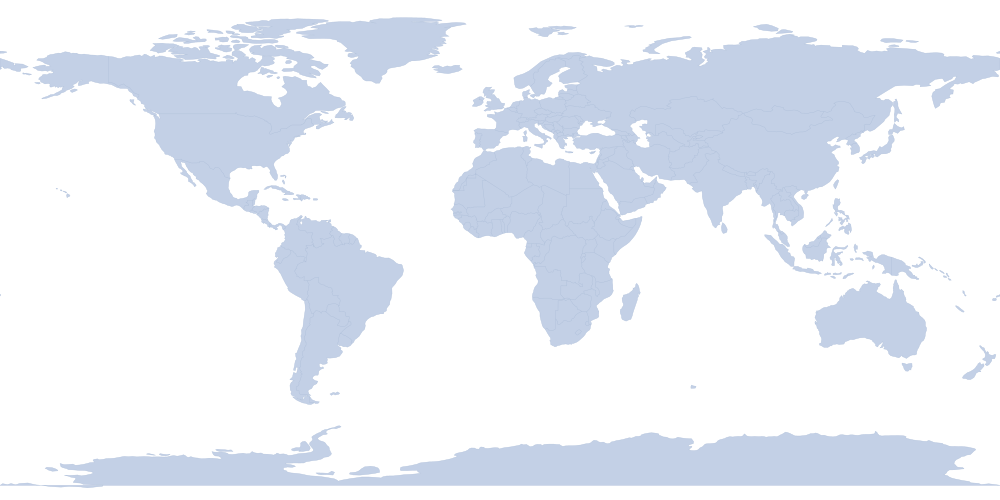
Approximate.The network's rough location — not a person or address. A VPN resolves to its exit node.
What this page already knows
No login, no permission prompt. These run live in your browser the moment you arrive.
Your transport fingerprint
Below the headers: your TLS and HTTP/2 stack itself — the signal that tells a real browser from automation, even when the user-agent lies.
Your TLS handshake (JA3 / JA4) and HTTP/2 fingerprint describe your network stack itself — below any header your browser can set — so they reveal a real browser vs. automation even when the user-agent lies. They appear here once the site is served behind the self-terminating fingerprint proxy(or Cloudflare Bot Management). On this connection TLS was terminated upstream, so the raw handshake isn't visible to the origin.
Your browser can volunteer IPs over WebRTC — sometimes your real one, even behind a VPN.
scanning STUN…Everything above ran entirely in your browser. Nothing was stored, logged, or sent to any server.
One API under everything
The page you're reading is just one client. Query any IP over HTTPS, no key — and it never geo-blocks.
curl -s "https://yourtrace.net/api/lookup?ip=216.73.216.184"
Any site you visit can read this much from Columbus, United States.
A VPN replaces the IP, location and ISP above with its own — and a removal service scrubs you from data brokers.